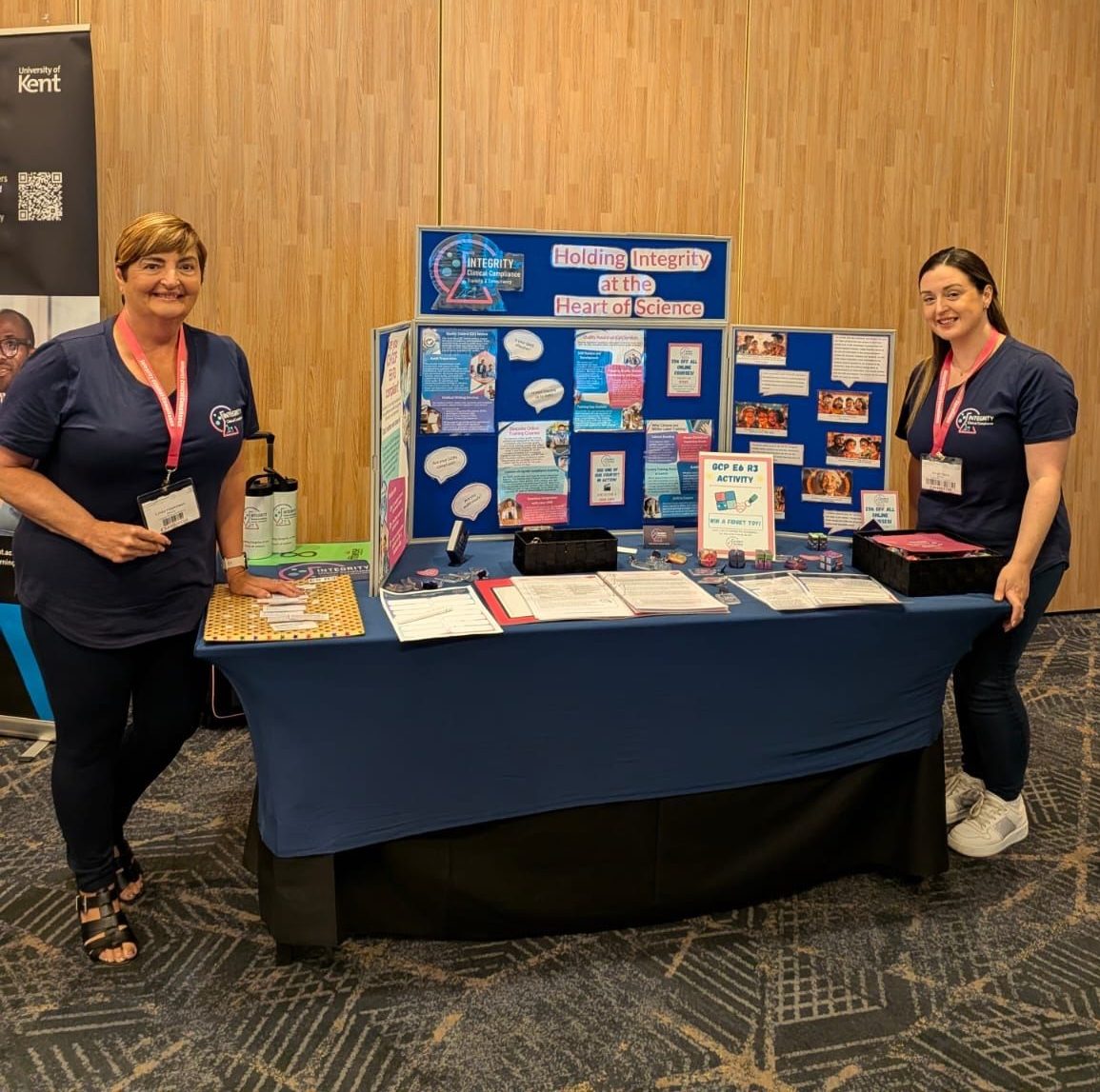
We recently had the opportunity to attend the ICR Conference in Birmingham, hosted by the Institute of Clinical Research. It’s always valuable stepping away from the day-to-day and spending time with others across the clinical research community, and this year was no exception.
Alongside the formal sessions, there was a real energy in the conversations happening throughout the event. From regulatory updates to practical implementation challenges, it was clear that many teams are grappling with the same core questions.
We also spent time at our stand speaking with attendees across the two days, which gave a useful insight into where the real pressure points are right now. Those conversations, combined with the sessions, highlighted a few consistent themes.
Regulation Is Evolving, But Interpretation Remains A Challenge
There is no shortage of regulatory change in the sector at the moment. Updates such as the CTR, ICH E6 (R3), and ISO 14155 continue to shape expectations across clinical research.
However, the recurring challenge is not access to guidance, but interpretation and consistent application in practice. Many teams are still working out what “good” looks like in their specific context, particularly when working across different studies or organisations.
What came through strongly is that there is a need for more practical support in translating regulation into everyday activity. This is where structured training and tailored guidance can make a real difference. Helping teams understand not just what the requirements are, but how to apply them confidently in their own environment, is often the missing piece.
Risk-Based Approaches Are Becoming Central
There is a clear and ongoing shift towards risk-based thinking across clinical research. The principle of proportionality is widely accepted, particularly when it comes to participant safety, data integrity, and overall trial quality.
The challenge, however, remains in implementation. Many organisations are still refining how to embed risk-based approaches in a way that is both compliant and workable in practice.
This is an area where support is often needed in making frameworks actionable. Turning high-level principles into practical processes that teams can consistently apply requires clarity and structure, rather than additional complexity.
Simplicity Is Being Valued More Than Ever
One of the strongest and most consistent themes throughout the conference was the growing emphasis on simplicity.
Across systems, documentation, and operational processes, there is increasing recognition that complexity does not necessarily improve quality. In fact, it can often create barriers to compliance and consistency.
The focus is shifting towards making processes more usable, more practical, and more aligned to how teams actually work day to day.
This is particularly relevant when it comes to documentation and quality systems. Streamlining these areas so they are clear, proportionate, and fit for purpose is something many organisations are actively trying to address. It is also where quality services can play a key role, supporting teams to refine processes without losing compliance or rigour.
The Importance Of Connection And Shared Experience
Beyond the formal agenda, some of the most valuable aspects of the conference came from informal conversations. Catching up with colleagues, meeting people face to face we had previously only seen on screen, and making new connections all added real value to the experience.
These conversations often circled back to the same themes seen in the sessions. While roles and organisations may differ, many of the underlying challenges are shared.
That sense of connection is an important part of the clinical research community. It helps to surface common issues and reinforces the value of shared learning across the sector.
Where Things Are Landing
Looking across the two days, a few clear points stand out.
Regulatory change will continue, but the focus is increasingly on how that guidance is interpreted and applied in practice. This is where many teams need the most support, particularly in building confidence and consistency.
Risk-based approaches are now firmly embedded in expectations, but operationalising them effectively remains an ongoing challenge for many organisations.
At the same time, there is a noticeable shift towards simplicity. Clear, practical systems and processes are becoming more valued than ever, particularly where they help teams work more efficiently without compromising quality.
Across all of this, there is a consistent need for practical support that bridges the gap between guidance and implementation.
This is where our work at Integrity Clinical Compliance is focused. Through training, consultancy, and quality services, we help teams translate regulatory expectations into practical, workable approaches. Whether that is supporting interpretation of guidance, strengthening training programmes, or streamlining documentation and quality processes, the aim is always to make compliance clearer and more achievable in day-to-day practice.
Final Thoughts
The ICR Conference was a useful reminder of both how much the industry is evolving and how many organisations are navigating similar challenges at the same time.
There is no shortage of guidance or innovation. The real focus now is on application, consistency, and practicality.
And that is where the most meaningful progress will continue to be made, not just through regulation or technology, but through how people interpret and implement change in real settings.
If your team is working through these challenges and would value practical support, you can explore our quality services, training, or get in touch with us here.